France’s Riots: Who Pays for the Damage?
Thousands of businesses have been damaged or looted, with losses estimated in the hundreds of millions of euros. But for a country already struggling with public debt, the bigger financial concern may be its rising borrowing costs.
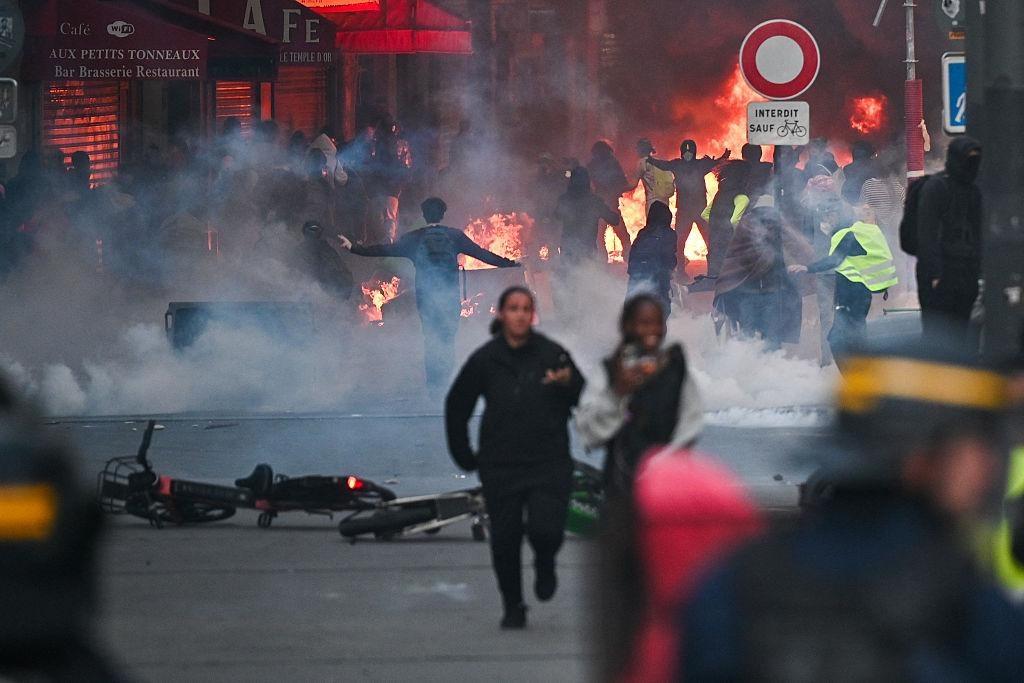
The streets of Paris are being cleaned, shattered shopfronts are being boarded up, and business owners are beginning to count their losses.
But the financial consequences of France’s latest riots extend well beyond the cost of replacing stolen goods and repairing damaged buildings.
What began as nationwide demonstrations on 17 October over rising living costs, education funding and public services descended into violence and looting in Paris and several other French cities. While most demonstrators participated peacefully, smaller groups vandalised businesses, set fires and clashed with police.
Early estimates suggest that thousands of businesses have been affected, with losses running into hundreds of millions of euros.
For France, the timing is particularly difficult. Its public finances are already stretched, economic growth is weak, and investors are demanding higher returns to hold its government debt.
So who ultimately pays for the destruction, and could the consequences spread beyond France?
1. Thousands of Shops, Hundreds of Millions in Damage
Retailers have borne much of the immediate financial impact.
France’s Federation of Commerce and Distribution (FCD), whose president is also Carrefour’s chief executive, initially estimated that approximately 1,500 shops had been affected nationwide, with damage running into the hundreds of millions of euros.
One trade publication later reported that more than 3,000 stores had been affected.
These figures remain provisional and should not be interpreted as a confirmed count of shops looted.
Supermarket operator Carrefour reported that around 50 of its stores were targeted, with repair costs alone estimated at more than €10 million.
For smaller businesses, the consequences can be particularly severe.
A shop owner who loses inventory may also need to replace windows, repair security systems, clean the premises and close temporarily while repairs are completed.
The financial impact therefore extends beyond the value of stolen merchandise.
It includes damaged buildings and equipment, cleaning and restoration, lost sales, additional security and the cost of reopening.
Some losses may be covered by insurers, depending on policy terms. Others will fall directly on business owners, landlords or public authorities.
Importantly, there is still no comprehensive nationwide breakdown separating stolen goods, rebuilding costs, cleaning expenses and lost trading income.
The headline estimate of hundreds of millions of euros should therefore be treated as an early assessment, not the final economic cost.
2. The Cost of Restoring Order
The destruction also carries a public-service bill.
French authorities deployed large numbers of police officers and gendarmes to manage the demonstrations and subsequent unrest.
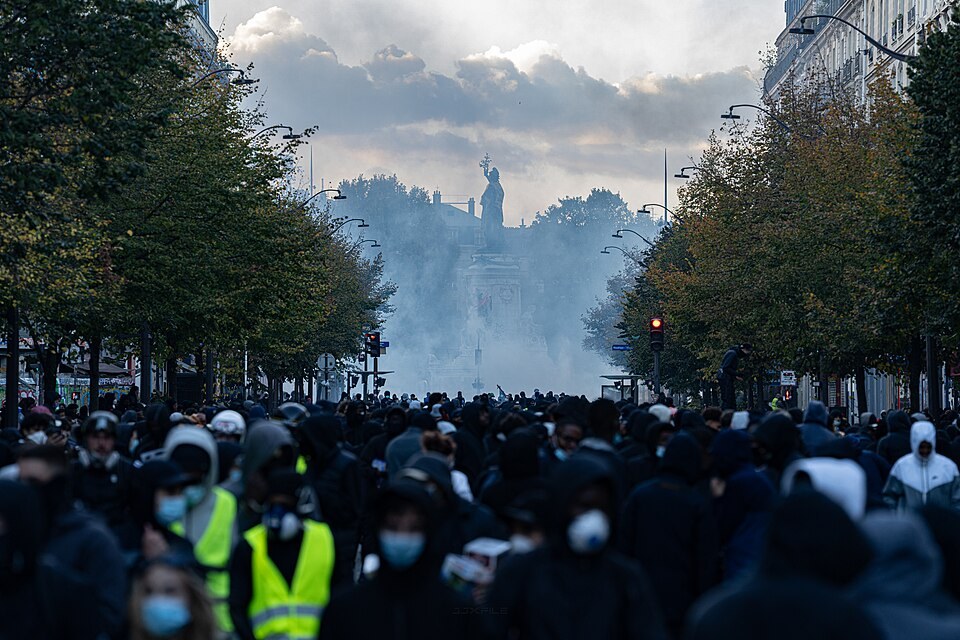
Nearly 2,400 people were arrested over the weekend, while police, firefighters and emergency medical personnel were mobilised across affected cities.
Large-scale security operations can generate additional expenditure through overtime, transport, specialist equipment, investigations and emergency medical services.
Municipal authorities must also pay for street cleaning, debris removal and repairs to damaged public infrastructure.
In Limoges, a major fire destroyed the historic city hall, adding a substantial rebuilding project to the damage caused nationwide.
However, an official consolidated estimate of the additional policing, emergency-response and municipal-cleanup costs has not yet been published.
This distinction matters. Officers’ normal salaries are already part of public budgets; the incremental cost of the riots is the additional spending required to respond to them.
It is also important not to assume that all private-sector damage will be paid for by taxpayers.
The financial burden will be shared among businesses, insurers, property owners, local authorities and potentially the central government.
Who shares the bill
- BusinessesUninsured losses, closures and reopening costs
- InsurersClaims for damage and business interruption
- Property ownersRepairs to buildings and shopfronts
- Local authoritiesClean-up and public infrastructure
- Central governmentPolicing, emergency response and possible support
3. France Was Already Facing a Budget Problem
Even before the unrest, France’s public finances were under considerable pressure.
According to the European Commission’s May 2026 forecast, the country’s government deficit is expected to reach 5.1% of GDP this year, well above the European Union’s 3% reference threshold, and to widen to 5.7% in 2027.
Public debt is projected to reach approximately 118% of GDP in 2026 and exceed 120% in 2027.
Meanwhile, economic growth is forecast at just 0.8% this year.
The government’s proposed 2027 budget already includes a €54 billion fiscal adjustment.
These figures matter because a government already borrowing heavily has less flexibility when unexpected spending arises.
It can redirect expenditure, borrow more, raise revenue or postpone other commitments. Each option carries economic and political trade-offs.
Still, the riots should not be confused with the primary cause of France’s fiscal difficulties.
Even hundreds of millions of euros in additional public expenditure would be relatively small compared with the scale of France’s national debt.
The greater concern is whether prolonged unrest makes it more difficult to restore economic growth, maintain investor confidence and implement fiscal reforms.
That is where the financial consequences could become more significant.
4. Why France’s 10-Year Bond Yield Matters
One of the clearest signs of investor concern has appeared in France’s government bond market.
That pressure predates the riots. France’s 10-year yield had already reached its highest level since 2002 earlier in October, and its gap with Germany was briefly wider than it is today. The unrest added to the pressure rather than creating it.
On 19 October, the yield on France’s 10-year government bonds rose to approximately 4.93%.
That compares with 3.47% for Germany, 4.10% for Spain and 4.57% for Italy.
In other words, investors were demanding around 1.46 percentage points more to lend to France than to Germany.
10-year government bond yields
19 October 2026
Euro areaApproximate closing yields. US and UK bonds are in different currencies, so they are shown for context only. Sources: market data reported by Reuters, Trading Economics and others.
This difference, known as the French–German bond yield spread, is particularly important because both countries borrow in euros.
Germany’s government bonds are widely used as the eurozone’s benchmark for sovereign borrowing costs. A widening spread indicates that investors are demanding a greater premium to hold French debt.
France’s yield also exceeded Italy’s, a notable development given Italy’s longstanding challenges with elevated government debt.
Why does this matter?
When bond yields rise, governments generally face higher costs when issuing new debt.
Existing fixed-rate bonds do not suddenly become more expensive for the government. But as older bonds mature and need refinancing, sustained higher yields can gradually increase interest expenditure.
For a country already running a substantial deficit, that creates additional pressure on public finances.
In the near term, investors will be watching the 2027 budget, Moody’s review of France’s credit rating on 23 October and polls ahead of next April’s presidential election.
The riots themselves may not fundamentally change France’s debt position. But if political instability keeps borrowing costs elevated, the financial consequences could extend well beyond the immediate damage.
5. What Does This Mean for European Stocks?
European financial markets have already reacted to the unrest.
On 19 October, French equities declined alongside broader European markets, with banking, retail and other domestically exposed businesses coming under pressure.
France’s CAC 40 fell as much as 1.4% before closing 1.1% lower, while the euro weakened and French government bonds sold off.
However, not every market movement can be attributed solely to the riots. Investors are also assessing inflation, interest rates, corporate earnings and the broader political environment.
For European equity investors, there are three areas worth watching.
Banks hold government bonds and are exposed to domestic economic conditions. Sustained sovereign bond-market volatility could affect their investment portfolios, financing conditions and investor sentiment.
These companies face more direct exposure to physical damage, business interruption, claims and potential changes in visitor spending.
France is the eurozone’s second-largest economy. A sustained deterioration in confidence could influence sentiment towards other European assets, particularly if investors begin reassessing fiscal risks across the region.
But the distinction between a temporary disruption and a lasting economic problem is crucial.
A weekend of destruction, however costly, is unlikely on its own to fundamentally alter the earnings outlook for Europe’s largest listed companies.
A prolonged period of instability that weakens confidence, delays fiscal reforms or raises borrowing costs would be a more consequential development.
THE EDIT
The immediate financial cost of France’s riots is already substantial, but the final bill remains uncertain.
Businesses must replace stolen goods and repair damaged premises. Insurers face claims. Municipalities must restore public infrastructure, while security and emergency services absorb additional costs.
Yet for investors, the most consequential number may not be the value of merchandise stolen or buildings destroyed.
It may be the yield on France’s government debt.
With public borrowing already elevated and the budget deficit well above the EU’s reference threshold, France has limited room for further financial strain.
The riots may cost hundreds of millions of euros in physical damage. The bigger question is whether they leave a lasting mark on confidence in France’s economy.
Data reflects information available through 20 October 2026. Damage estimates remain preliminary. This article is for general information and education, not personalised investment advice.
The Daily Edit.
Five things investors in Asia need to know before markets move.
Join a growing community of investors and ambitious thinkers.


